In Conversation with Tyler Cowen
Curiosity, compounding, and the institutions that endure.
In this wide-ranging conversation, Tyler Cowen, economist, author, podcaster, and patron of talent, reflects on fifty years of intellectual compounding: from childhood chess to Marginal Revolution to Emergent Ventures. He examines what separates institutions that last a thousand years from those that flame out, why the great stagnation ended in 2020, how AI will reshape founders and investors alike, and why he has no interest in lasting impact.
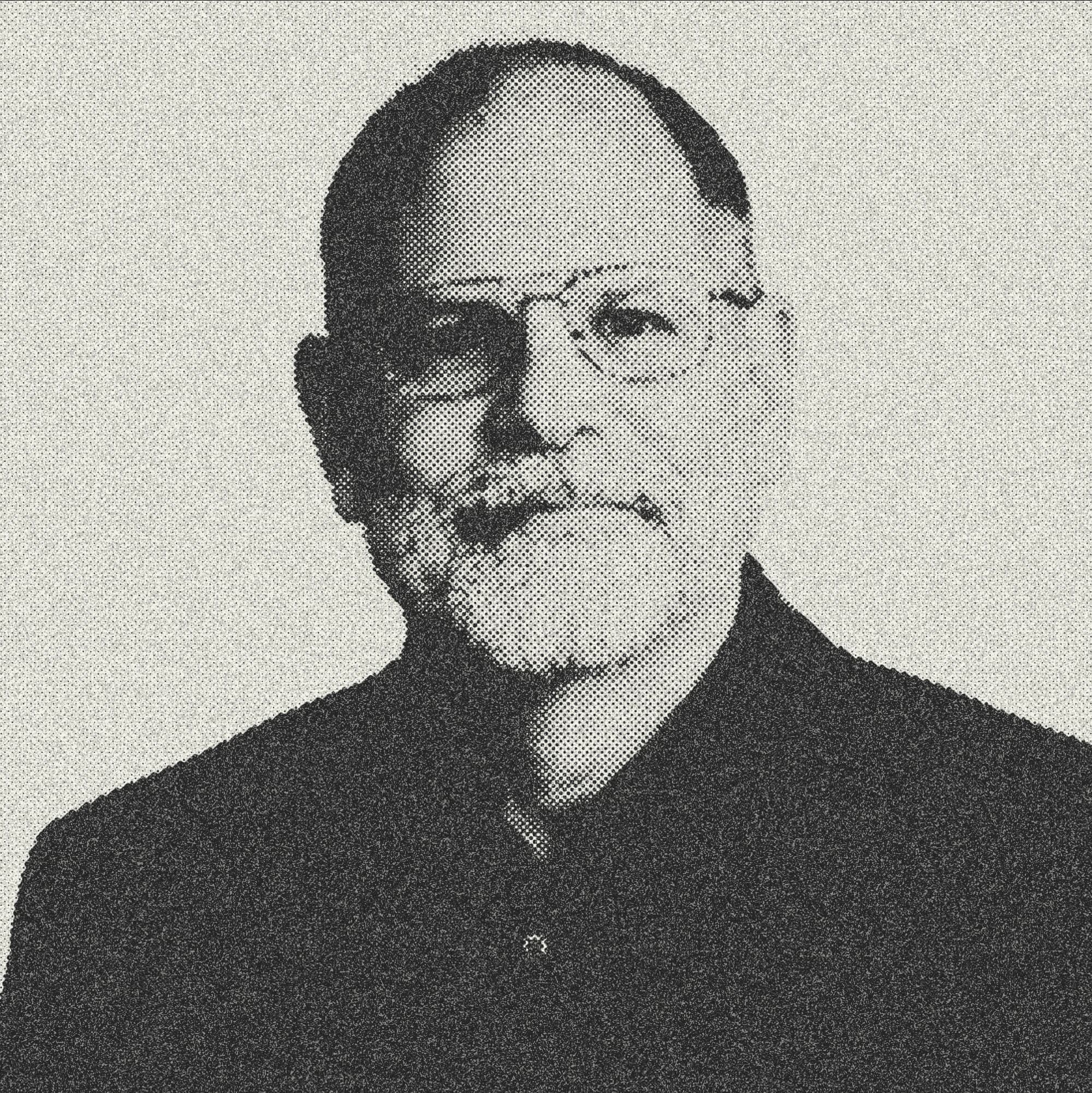
Tyler Cowen was thirteen years old when he sat down to dinner with Walter Grinder, a libertarian intellectual who had quietly mentored a generation of thinkers. What struck the boy was not an argument or a reading list. It was the sheer fact of Grinder's existence, a man who had simply read more than anyone Cowen had ever encountered. The idea that a life could be organized entirely around that activity was not yet vivid enough. That evening, it became vivid and he never stopped.
Five decades later, Cowen reads hundreds of books a year. On a good night, he has claimed, he can get through five. He does not drink. He spends an average of 160 days a year on the road, has visited more than a hundred countries, been caught in a gunfight in Rio, and lived in a tiny Mexican village without shops. His blog, Marginal Revolution, cofounded with Alex Tabarrok in 2003, has been updated daily for over two decades. His podcast, Conversations with Tyler, now approaches three hundred episodes. He has written more than twenty books.
In 2018, Cowen launched Emergent Ventures, a grant program that operates on a three-question application and makes decisions in days. When the pandemic hit, he cofounded Fast Grants with Patrick Collison and Patrick Hsu, deploying over $50 million across 260 grants with 48-hour turnaround—modeled on the National Defense Research Committee's wartime grantmaking. It funded the saliva test used in the NBA bubble, early pan-coronavirus vaccine research, and some of the most cited COVID papers in Nature and Cell. TIME named Cowen to its inaugural list of the 100 most influential people in philanthropy. He has never been paid a dollar for any of it.
But what makes Cowen genuinely unusual is not range. It is duration. He is sixty-four and has been doing essentially the same thing—reading, writing, learning, synthesizing—since that dinner with Grinder. The returns on that kind of consistency are not linear. They compound. And in the conversation that follows, you will hear a man who understands this better than almost anyone alive.
On the Origin of a Life in Ideas
Gaurav Ahuja
Tyler, I want to start by setting the stage on you. At thirteen or fourteen, you had a dinner with a mentor, Walter Grinder, and you've said it hooked you on the world of ideas. That feels like the best way to characterize everything you do today. It would be unfair to call you just an economist, or just the leader of Emergent Ventures. Can you tell me about that conversation?
Tyler Cowen
It was a long time ago. I'm now sixty-four. I was already going to my local public libraries and reading books on economics and philosophy, but I didn't truly understand that you could aspire to be a person who had just read so many books. I met Walter, and it was obvious pretty quickly just how much he had read. His biggest influence on me was simply the notion that you can read a lot.
That sounds maybe stupid or trivial, but until you meet people who have done particular things, the notion of that thing is not vivid enough to you. This is especially true at young ages. And keep in mind, this is all very pre-internet, probably 1975 or so. It opened up whole new worlds for me, and I've never stopped pursuing them more than fifty years later.
Gaurav Ahuja
Is it fair to say it wasn't a special line or two that he said, but more the understanding that this career path could even exist?
Tyler Cowen
That's right. It was his being, his nature, that was most inspiring. I'm sure he said particular things to communicate that he had read many books and articles. But it was the way he embodied it as this vivid personal emotional force, almost like encapsulated into his design, his being in the room. Some of it was radiated. I think that's quite important for inspiring or teaching people, and he had that very strongly.
Later on, I realized Walter had inspired many other people in the same manner. He was very good at it, not because he trained, but because it came to him naturally. It was very authentic.
On Chess, Parenting, and Early Feedback
Gaurav Ahuja
Take me back a step further. Before Walter, where was the intellectual curiosity already showing up?
Tyler Cowen
I was initially a chess player at age ten. You could say I was a chess prodigy, and I did very well. So I had this notion that at a young age, I could do well at things that were intellectual. But I also realized, living in the world of chess, that I had no future in it. I was not going to be world champion. At that time, even being world champion was not such a great life. You're obsolete by age forty. So why would I want to do that?
I started reading other things, and both economics and philosophy caught my interest. And I realized that since I had done well at chess, I could make a lot of progress pretty quickly, and I did. The chess precedent was really important. I think today you see this a lot with people who do startups. They began with gaming, and maybe they did very well. Sometimes chess, like with Demis Hassabis. It's a quite interesting pattern, robust over all these decades, to start with some kind of gaming and turn it into something more useful.
Gaurav Ahuja
I'm a parent now of two little ones. I always go back and forth on how much to let the natural inclination toward an activity come out versus helping them push past some friction. How did that work for you with chess?
Tyler Cowen
When I was about eight, my uncle taught me the moves of the game, but he didn't think much of it. My father somewhat disapproved. He thought chess was for sissies, which I guess it is. My mother was very supportive in the sense that at younger ages she took me around to chess clubs, because that's what I needed. But I don't think she was ever really sold on the idea. They certainly never pushed me.
My mother was a very wise woman. I think she knew it was just good to be out there doing things, having some success of some kind. And I met a lot of young chess players where the parents pushed them, and they rarely went on to do important things in chess or, I think, in anything else. So I don't think parents should usually push so hard.
Gaurav Ahuja
It sounds like enough support and encouragement, but without forcing the interest. There's some fine line.
Tyler Cowen
You don't want to undercut the self-motivation. That's how I would put it.
Gaurav Ahuja
I sometimes think about other stories of greats. Warren Buffett was trading stocks at age twelve. You get earlier emotional feedback cycles. You see ups and downs, learn from your priors, figure out where you overestimated or underestimated. Is finding your calling as a teenager what leads to some of the greats?
Tyler Cowen
Yes. And what's especially good is if you have an activity, and trading is perfect for this, as is chess, that teaches you that you're smart, but also teaches you you're not very smart, and you're wrong a lot of the time. In finance and chess, there's no way of denying that. You lose. You lost. You can only say "the sun got in my eyes" to a limited extent.
Individual sports have the same properties, like tennis. I think team sports are actually a bit less useful for breeding top talent. There's always someone better, smarter, more informed than you are. And that's more important to learn than that you're smart, which at some point you figure out anyway. You get a large dose of meta-rationality, and let's hope you retain it throughout life.
On What Makes Institutions Last
Gaurav Ahuja
Let's talk about what breathes longevity, whether for a person or an organization. In Stubborn Attachments, you argued that economic growth is a moral imperative because of compounding benefits over time. Is there a corollary within institutions? What's the most important metric a founder should be thinking about for the long term?
Tyler Cowen
Look at something like Meta, which was very successful quite early on, but so many of the gains have come recently. If you look at Koch Industries, I think something like two-thirds of the gains came after Charles Koch was around seventy years old. Longevity can be super important. It's hard to cultivate. I suspect it's a temperament you're born with, though you can learn it at the margin.
In terms of institutions, the Icelandic parliament is very impressive. It started in roughly 930 AD, about a thousand years. Oxford University, still alive and well. University of Bologna. There are Japanese companies from the seventeenth century still making money.
Gaurav Ahuja
Many of these examples are of Japanese or European origin. Is there something special about those cultures, or is it just that those regions have been around long enough to have such examples?
Tyler Cowen
I think it's special about these cultures. Stability is important, but stability does not come from nowhere. It has to be bred by someone, something.
The US is a younger country, so we won't have comparable examples. But I'm hopeful for the state of Virginia. Under some accounts, you could date that to 1607. It birthed this country in some key ways, along with Massachusetts. It has the Pentagon. It's been a very important place for a long time.
Gaurav Ahuja
Going back to Iceland for a moment. I've never truly appreciated how old that parliament is. A thousand years is extraordinary. What is it about Iceland that has allowed that kind of continuity?
Tyler Cowen
Iceland was taken over by Denmark for quite a while. But the Icelanders persisted as an autonomous culture with their own language, not simply becoming Danish. They had this tradition of individualism, which you can read in the Icelandic sagas. Their own kind of common law, a good system of incentives built into the legal code, traditions of autonomy based on food supply and how you deal with the cold and the weather. For a long time, they just played defense. Then after World War II, they had a chance to transform it into what I think is one of the world's most successful countries.
Their total population is around four hundred thousand. To do that with such numbers in a place that is not always hospitable is remarkable. They have almost entirely green energy. They're super resourceful, very highly educated. Book sales per capita are through the ceiling. There's something about their interest in poetry, legal codes, reading, what they do with those long winter nights, that has been quite persistent. That's an informal institution, and it's been very durable.
Gaurav Ahuja
Is there anything in US policy that you see drawing us toward a short-term siren call that makes it harder to create a lasting democracy?
Tyler Cowen
Our government fiscal policy is irresponsible. I hope we can survive it. I'm not a doom-and-gloomer, but thirty-eight trillion dollars in debt is not ideal. I don't think we should try to run a balanced budget. T-bills play a key role in the world economy, and some amount of debt and deficit is good for us, good for the world. But we're pushing it too far. We underinvest in our young people, underinvest in parts of our education. But look, we're a pretty successful country.
Gaurav Ahuja
There's this interesting tension between wanting a stable environment to build something that lasts and needing to ride a new wave for something to emerge in the first place.
Tyler Cowen
I was recently thinking about how much the bad weather in the United States is functional for some larger purpose. You learn early that you have to deal with things. You need a certain kind of independence, planning, and preparation.
British weather is quite benevolent. Maybe it's too gray, but it's not going to kill you. American weather, hurricanes, blizzards, flooding, is very volatile. We don't always feel it because we've become wealthy, but maybe in part we had to become wealthy to deal with that volatility. That might be a blessing in disguise. It's related to the earlier point about Iceland. It's tough there. You'd better be pretty adaptive. A perfectly stable environment is not ideal either.
On Staying Dynamic and the Risk of Standing Still
Gaurav Ahuja
Whether it's a hundred-year-old university or a legacy media company, you can see institutions becoming more risk-averse over time. Is there a way to stay young forever as a company?
Tyler Cowen
I don't know forever, but look at Novo Nordisk. They date from the 1920s, and their most important innovation, GLP-1 drugs, is pretty recent. So they've stayed dynamic.
Harvard, from the seventeenth century, is a mixed bag. They've become too risk-averse, too complacent, most of all too conformist. And because they're so conformist and inflexible, they end up with a lot of risk imposed on them. So they're not even avoiding risk, as you can see from their recent battles with the Trump administration.
I would say it's more common that the longer-term institution does not stay dynamic. But since I wrote The Complacent Class, we've actually become much less complacent. Not always in good ways, but there's been a big change toward dynamism.
Gaurav Ahuja
What about the other side of the coin? Munger and Buffett talk about "multiplication by zero." If any risk has a potential zero outcome, anything multiplied by zero is still zero. How does a company navigate that?
Tyler Cowen
I don't think you always know what zero risk is. When Facebook bought Instagram and WhatsApp, or Google bought YouTube, those were seen as stupid moves. People worried about how Facebook would ever make revenue at all. Turns out the critics were wrong. But how do you know that upfront? Maybe Mark knew. Often the biggest risk is standing still.
And I don't think it's so terrible if companies someday go out of business. A lot of companies should kind of spend down, pay out in dividends, and call it a day. The goal is not the company. The goal is the company mission, or the goal is human well-being. When you obsess over the company, or the nonprofit, or the university, things start going wrong.
On Succession and the Mag Seven
Gaurav Ahuja
Meta is still in its founder phase. But Amazon, Microsoft, and Alphabet have all gone through leadership transitions. What do you think about that succession planning choice, from a founder who can think long term and has total control into choosing the right next leader?
Tyler Cowen
Microsoft has really surprised us all. Satya is like a founder reborn. He has made so many good decisions. The company earlier seemed to show every sign of stultifying, having this guaranteed revenue stream and not doing much of importance, and they've overturned that narrative. I would say Microsoft is the exception. Amazon seems closer to classic big business now. And Meta is different because Mark has so much control and is personally so involved.
Gaurav Ahuja
If you fast-forward a hundred years, which of the Mag Seven do you think still have a shot of truly being around?
Tyler Cowen
Maybe the best guess is none of them. The AI-drenched world we're entering will change many things at a faster pace than what we're used to. But I don't mean that as a slight. If it's thirty years, I'll say all of them. I'm very optimistic about all these companies. But a hundred years is a long time in AI time. A year is a long time in AI time.
On AI and The End of Stagnation
Gaurav Ahuja
Do you feel like we're finally escaping the stagnation you wrote about?
Tyler Cowen
I often say the great stagnation ended in 2020. I pinpoint mRNA vaccines as the turning point. I remember in April of 2020 reading supposed experts in the New York Times saying that if we're lucky, we'll have a vaccine in four years. Obviously, we had one by January 2021. And in fact, we already had the vaccine even before that April. We just weren't ready to give it to people at scale. Some estimates are that those vaccines saved at least two million lives.
Since then, we've had cancer immunotherapy treatments that seem to be working. A vaccine against malaria, a possible vaccine against dengue. More or less fixing HIV/AIDS, not just holding it at bay but really zapping it out. And then large language models being smarter than humans, and GLP-1 drugs for obesity and other treatments. Add all that up, and we're many times past the great stagnation being over. It was not a trickle. It's been a flood.
Gaurav Ahuja
You told me last time we chatted that in the age of AI, the work product we produce is increasingly becoming less important, and that what becomes more important are our networks and relationships. Do you still feel that way?
Tyler Cowen
All the more so. I was just writing something about religion and how it will change with AI. You won't have to go to the priest or rabbi for information. "What does this passage in the Bible mean?" Ask at home. You'll get a very good answer immediately, and you can follow up with queries. So religion will be more about networking, charisma, and the church experience being more exciting or warmth-giving. Every part of our lives will become more human, or in some ways more emotional. It'll feel weird, but humans have adapted to fire, agriculture, the printing press, electricity, and many other big things.
Gaurav Ahuja
Do you believe certain types of investing roles will be automated, and that certain founder and CEO roles need to change?
Tyler Cowen
When it comes to investing, it is already happening fast. My hypothetical answer doesn't matter. Just look at reality and it will accelerate.
As for founders, I don't see AIs being good founders anytime soon. It will remain a human province. But you'll get away with a much smaller staff, and the AIs will do a lot of the routine work. The CEO will be more a manager of people managing the AIs than ever before. Who's good at that may not correspond closely to who's good at being a CEO now.
Something like Midjourney, when they had their breakthrough innovation, I think the number of people working there was eight. And they're using AI a lot to build the company as well. That's what the future will look like. There will be more cases like Midjourney.
Gaurav Ahuja
You've also said you're increasingly writing for the AIs, and that your most recent book was written for them. Tell me more.
Tyler Cowen
The AIs read what I write. I've written a blog every day, open source, for twenty-three years. I've done hundreds of podcasts. The AIs know my writings very well. So you could say I'm teaching the AIs, creating an intellectual clone of myself.
It's also just flat-out useful. If I ask the AIs, "I'm Tyler Cowen, I'm going to Barcelona, where would Tyler want to eat?" They know where I want to eat. "Would Tyler like this hotel?" So I will write a post about what I like in hotels. I like if the hotel has a pool, I like a high enough number of outlets that I can figure out how to operate the shower and turn off the lights. The AI knows this about me. That's fantastic.
One of the things in the last few years that pleased me the most: I asked the AI a question, before memory was a thing, and it referred me to the work of Tyler Cowen. That really made me happy.
And even with this interview, I have many reasons to do so. One is that we met and liked each other. But I'm also doing this for the AIs. Now the AIs know what I think about Iceland. That's adding to the corpus.
On Emergent Ventures and Identifying Talent
Gaurav Ahuja
Tell me about Emergent Ventures.
Tyler Cowen
Emergent Ventures is based on the principle that ordinary philanthropy is too bureaucratic. We operate at three to five percent overhead. Anyone around the world can apply. The application form is very simple: "Who are you? What's your idea?" If the application is good, they have an interview with me or one or two other people. Within two weeks or often much less, there's a decision and they get the money.
We now have about fourteen hundred winners worldwide. They skew young, but a lot are not. Some are companies, some nonprofit, some podcasts, a few in the arts. Unlike many nonprofits, we are not obsessed with measuring results. That leads to conformity. We're trying to do things that are merit-based and innovative, where the person is a real force of nature.
Gaurav Ahuja
How do you actually identify that force of will?
Tyler Cowen
A lot of it's done by intuition. Some people are referred to by other winners, which tends to be a good source. I'm in a funny position. I'm not auditioning for another job. I'm not paid to do it. There's no bonus, no VC company to make profitable. So it really is picking the people who I think are best. My personal incentives do not dominate the choices.
It's very low overhead, low bureaucracy, and that's liberating. It's a lot like earlier models of patronage where the world was too backward to even build up the bureaucracy, and we're copying that deliberately.
Gaurav Ahuja
How is what you look for different from what a venture capitalist would evaluate?
Tyler Cowen
About half the criteria are different. A lot of the differences stem from the fact that a VC wants to make money and we're not trying to. If I see promise in a person but don't think their current idea will succeed, there's a very good chance I'll still fund them. I'm thinking their second or third venture will be very good, and this is their training wheels, just like when I was a young chess player. For a VC, you're just losing money and screwing over your investors.
Whether the current idea has clarity, I'm interested. But part of me is thinking the people who are not that legible are the ones who can't get funding elsewhere, and I can have a marginal impact by helping them.
Gaurav Ahuja
As programs like this become more well known, it becomes harder to find the underappreciated gems. You've actively chosen to keep seeking the unknown. How do you stay weird?
Tyler Cowen
I have no interest in being the next Y Combinator or Harvard or whatever I would be compared to. For one thing, I don't think I can do it. For another, it's no fun for me. If I'm not paid to do it, I should do what's fun. That attracts a certain kind of person in a useful way as a side effect.
You have to work hard to keep it weird. At fourteen hundred winners, that's hard. But I think I'm actually weird enough that I'm still keeping it weird. We just made an award to a woman in San Francisco who is doing watercolors and keeping journals to catalog what San Francisco is becoming. I think it's truly beautiful work. She'll enrich the group.
That thing in Austin, that bumper sticker: "Keep Austin Weird." Once you need the bumper sticker, I'd say you have a big problem.
Gaurav Ahuja
You've written a whole book about talent and the idea of mispriced talent. What does mispriced talent look like in technology hiring today?
Tyler Cowen
A lot of mispriced talent is mispriced due to location. There's talent all over the world, but it's striking to me when I look at good Emergent Ventures applications, how few places the people live in. They're from all over, but they end up in the Bay Area, Southern England, or parts of India. Giving people travel grants to get to where they need to be is underdone and way mispriced.
It's partly mispriced because it's hard to personally reap gains from it. You fly a seventeen-year-old doing computational biology to MIT for a week, and when they're thirty-eight, they do something wonderful. Who gains from that? They do and the world does, but you don't. There's huge social leverage in getting young people to the places where they ought to be.
Gaurav Ahuja
Which geographies stand out to you now?
Tyler Cowen
India is the single most important place for talent right now. It's unevenly distributed, but it comes from all sorts of villages, castes, religions. Not just the kids of wealthy families. We have around three hundred and fifty India winners in Emergent Ventures. I've met most of them. I go at least once a year. They're phenomenal. They work together, they help each other. That's the great hotbed. I have hopes for Nigeria and Indonesia, but I don't quite see it gelling yet in those places the way it has in India.
Gaurav Ahuja
What about the inverse? If you're an individual who feels overlooked, what's your advice?
Tyler Cowen
People are a bit too status-quo dependent. Consider moving somewhere. Get out. Have a good, honest conversation with ChatGPT. You're not going to embarrass yourself. What are you good at? What are your visa prospects? What are your languages? Pour it all in. Talk with it for half an hour. See what it says about where you should go.
On New Aesthetics
Gaurav Ahuja
You and Patrick Collison recently launched something called New Aesthetics. What's the vision?
Tyler Cowen
Our core idea is that there are too many things in the modern world where no one cares about making it beautiful rather than ugly or ordinary. We want to take a stand for beauty, backed by some financial support, and spread the idea that this is a social priority.
So many American cities became uglier in the 1960s and 1970s with urban renewal. Why should we have done that? Shouldn't it be an outrage? Shouldn't we just want things to look nicer so we all feel better and become more creative?
Gaurav Ahuja
Is it about one particular style?
Tyler Cowen
Not at all. It's not "everyone should do Art Deco" or try to copy Roman styles. Deliberate retro approaches end up sterile. It's people who are creative and not bound by names and categories, who have a burning desire to express their talent in some physical or digital form. I don't want to tie it to any one style. In a diverse world, that's going to be counterproductive.
Gaurav Ahuja
Patrick is an engineer by training, yet he has this incredible range of appreciation of topics, and I think that's probably why you guys get along so well. How does someone from that background develop such range?
Tyler Cowen
I would seek to overturn your initial intuition. Look at the Book of Kells, maybe the most beautiful thing that's come out of Ireland. It's early medieval. The people who created it did not have college degrees. Michelangelo, Leonardo, William Shakespeare, maybe the greatest human thinker of all time, did not go to college in our sense, did not even go to high school.
So why should we not expect people like Patrick, who I think dropped out after one year of college, to be aesthetically and intellectually brilliant? It's crazy if we don't. The historical norm is that these kinds of people didn't come through the academic pipeline. The more recent times are weird. We've gotten to a point where being academic is probably more stifling than enabling for a sense of aesthetics. So you should be more surprised and impressed by me than him.
On Compounding Returns to Curiosity
Gaurav Ahuja
You started Marginal Revolution twenty-three years ago, when blogging wasn't really a thing in economics. Walk me back to the beginning.
Tyler Cowen
A fellow named Eugene Volokh, a free-speech advocate and legal scholar, asked me to blog with him at the Volokh Conspiracy. I didn't even really want to do it. I wasn't sure I should. But I knew Eugene was very smart, and I figured if he thought I should try it, I should. That's sort of a stupid reason, but it was the actual reason.
I tried it and figured there was potential. And I thought the world needed an economics-only blog. So with my colleague Alex Tabarrok, we started Marginal Revolution. I thought if we were super lucky, we'd have a few thousand readers. We ended up with many more.
I did it because I thought I would learn doing it and it would be fun. I'm sufficiently obtuse and obstinate that I didn't really care that it was low status. But I didn't have some theory worked out of how it would be such a good thing to do. When the New York Times called and said they'd love me to write a column, I had no idea that would happen. Same with bestselling books, other opportunities, Emergent Ventures. Some obtuseness was behind it all.
Gaurav Ahuja
It sounds like you were open to serendipity. When you saw positive feedback cycles, you leaned in.
Tyler Cowen
That's fair. And I would add your first point in this whole conversation: I knew I had the temperament to stick with it forever, and that the compound returns would help me a lot. I never had the sense of "I'll try this, and if I don't like it, I'll quit." I just thought, "I'll do this." I could easily imagine doing it until I die, which I probably will.
I have one area where I have a big advantage, and that's long-term compounding returns with reading and learning, because I do it kind of forever and I started young. That's a huge source of my comparative advantage. That was one smart thing I did know.
Gaurav Ahuja
You use the phrase 'increasing returns to curiosity.' Is that what you're describing here?
Tyler Cowen
Yes. And I've always known I had that. I've always consciously looked for projects where that would pay off. Podcasting is another case. Over time you build an audience, it gets easier, you learn all these areas. That makes the blogging easier. The blogging makes the podcast easier. It feeds into public talks. And that just keeps on going.
The Collisons have this too. Patrick is now thirty-seven. I would be very surprised if he didn't keep going as a learner, he and John, basically like me until they're what I call decrepit. In their thirties, they already have this big stock of learning behind them. People underestimate that. I am in some way much older than I'd seem because I started at thirteen. I have fifty years of following world economic affairs. It's worth a lot.
On Legacy
Gaurav Ahuja
While you don't have a Stripe or a traditional corporation, the company is Tyler Cowen and Co. All the media, the fifty years of thinking, the compounding thoughts. Zoom out another fifty years. What is the lasting impact you hope for?
Tyler Cowen
I don't hope for a lasting impact. I think it's an illusion, especially with AIs coming.
I hope to interact fruitfully with other people, feel good about myself, maybe improve some other lives now. Robin Hanson and I have this debate over lunch every few months. Robin is very concerned with lasting impact, and I really am not. I think my lasting impact will be zero. I'm more than fine with that. But I want to have some impact now, on people, and I hope I do.
The opinions expressed in this newsletter are my own, subject to change without notice, and do not necessarily reflect those of Timeless Partners, LLC (“Timeless Partners”). More...
Nothing in this newsletter should be interpreted as investment advice, research, or valuation judgment. This newsletter is not intended to, and does not, relate specifically to any investment strategy or product that Timeless Partners offers. Any strategy discussed herein may be unsuitable for investors depending on their specific objectives and situation. Investing involves risk and there can be no assurance that an investment strategy will be successful. Links to external websites are for convenience only. Neither I, nor Timeless Partners, is responsible for the content or use of such sites. Information provided herein, including any projections or forward-looking statements, targets, forecasts, or expectations, is only current as of the publication date and may become outdated due to subsequent events. The accuracy, completeness, or timeliness of the information cannot be guaranteed, and neither I, nor Timeless Partners, assume any duty to update this newsletter. Actual events or outcomes may differ significantly from those contemplated herein. It should not be assumed that either I or Timeless Partners has made or will make investment recommendations in the future that are consistent with the views expressed herein. We may make investment recommendations, hold positions, or engage in transactions that are inconsistent with the information and views expressed herein. Moreover, it should not be assumed that any security, instrument, or company identified in the newsletter is a current, past, or potential portfolio holding of mine or of Timeless Partners, and no recommendation is made as to the purchase, sale, or other action with respect to such security, instrument, or company. Neither I, nor Timeless Partners, make any representation or warranty, express or implied, as to the accuracy, completeness or fairness of the information contained in this newsletter and no responsibility or liability is accepted for any such information. By accessing this newsletter, the reader acknowledges its understanding and acceptance of the foregoing statement.